
TCP 3-Way Handshake
What Is the TCP 3-Way Handshake?
Before any data is exchanged, TCP establishes a connection using a process called the 3-Way Handshake.
This ensures:
both devices are ready
both agree on initial sequence numbers
communication is synchronized
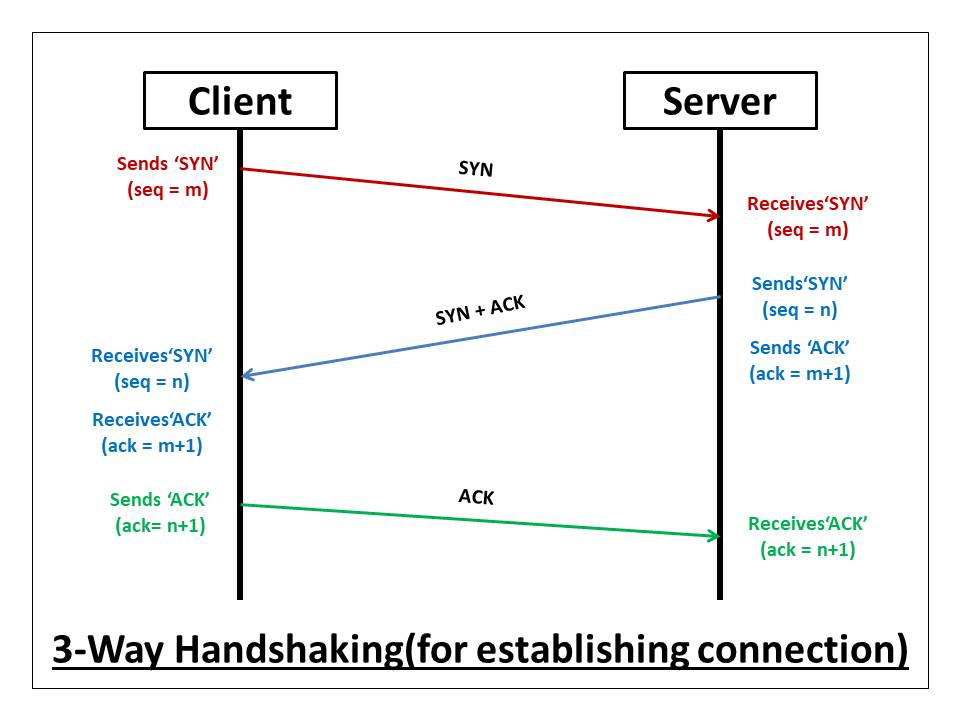
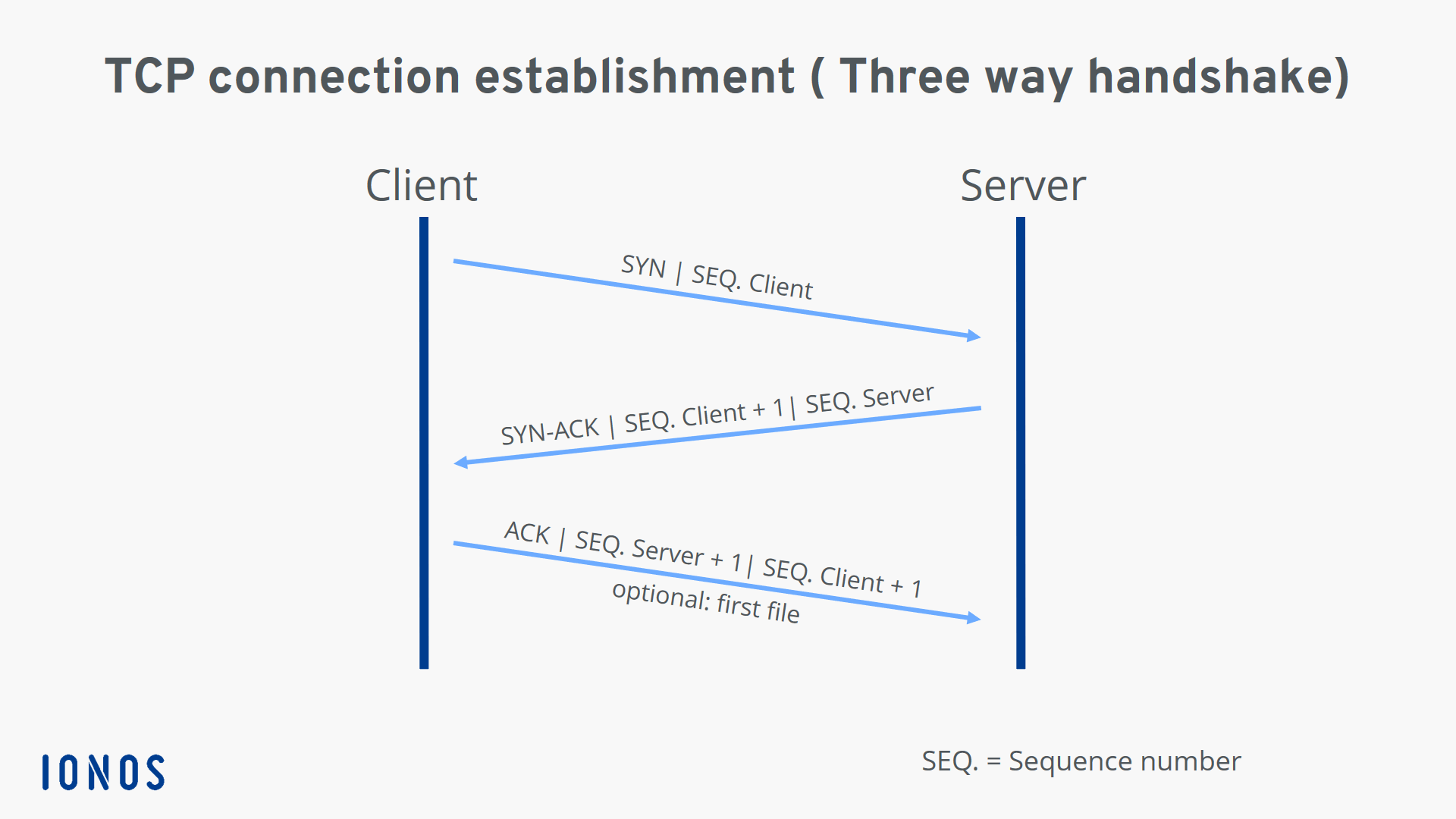
5. Step-by-Step Working of SYN, SYN-ACK, and ACK
Let’s assume:
Client (A) wants to connect
Server (B) is listening
Step 1: SYN (Connection Request)
Client sends a packet with the SYN flag set
It includes an initial sequence number (ISN)
Meaning:
“I want to start a connection, and here’s my starting number.”
Step 2: SYN-ACK (Acknowledgment + Request)
Server responds with:
SYN (its own request)
ACK (acknowledging client’s sequence number + 1)
Server also sends its own initial sequence number
Meaning:
“I got your request. I’m ready too.”
Step 3: ACK (Final Confirmation)
Client sends an ACK
Acknowledges server’s sequence number + 1
No data is sent in this step
Meaning:
“Confirmed. Let’s start communication.”
✔️ Connection is now established
✔️ Data transfer begins
6. How Data Transfer Works in TCP
TCP treats data as a continuous stream, not individual messages.
TCP Segmentation
Large data is broken into smaller segments
Each segment is assigned a sequence number
Sequencing & Acknowledgment
Receiver uses sequence numbers to:
reassemble data in correct order
detect missing segments
Receiver sends ACKs confirming received data
If a segment is missing:
- sender retransmits it
7. How TCP Ensures Reliability, Order, and Correctness
TCP achieves reliability using multiple mechanisms:
1. Sequence Numbers
Ensure correct ordering of data
2. Acknowledgments (ACKs)
Confirm successful delivery
3. Retransmission
Lost packets are resent automatically
4. Sliding Window (Flow Control)
Controls how much data can be sent before acknowledgment
5. Error Detection
Corrupted segments are discarded and resent
This is why TCP is slower than UDP — but far more reliable.
8. Graceful Termination of a TCP Connection
TCP connections do not end abruptly.
They are closed gracefully to avoid data loss.


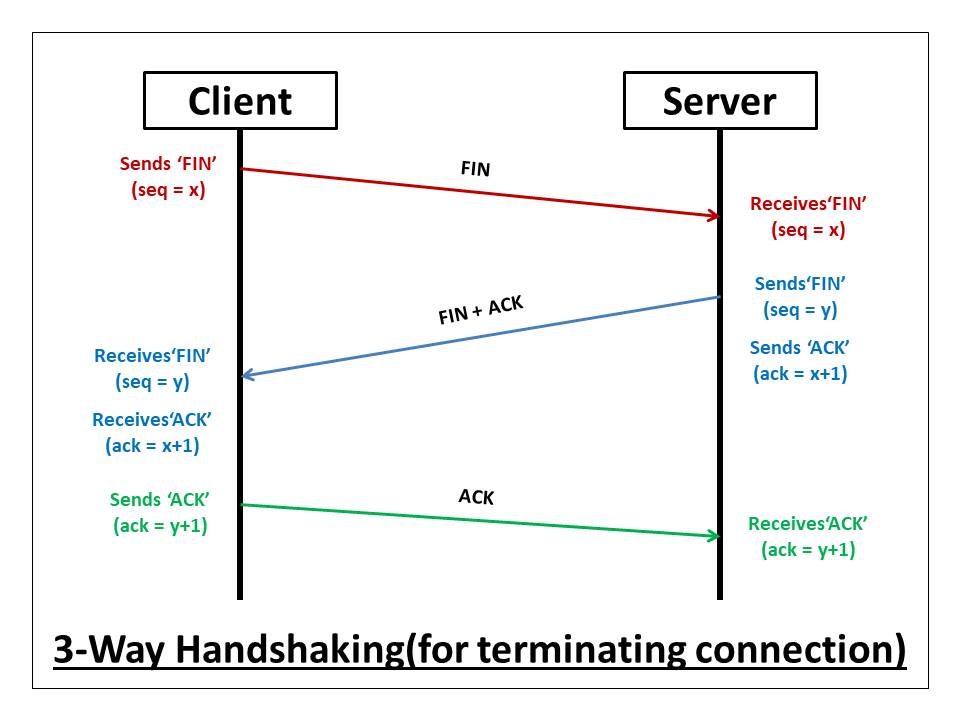
Connection Termination Process
One host sends FIN (Finish)
Other host responds with ACK
Second host sends its own FIN
First host responds with ACK
Connection enters TIME-WAIT
Finally, both sides close the connection
This ensures:
all remaining data is delivered
duplicate packets are handled safely
9. What Is a Half-Open TCP Connection?
A TCP connection is half-open when:
one side believes the connection is active
the other side does not
This can happen due to:
network failure
firewall interruption
system crash
Half-open connections can waste server resources and are handled using timeouts and resets.
10. Simple Analogy: TCP Handshake in Real Life
Think of a phone call:
You: “Can we talk?” → SYN
Other person: “Yes, I’m ready. Are you?” → SYN-ACK
You: “Yes.” → ACK
Conversation starts.
When both are done, they say goodbye properly — not by hanging up randomly.
That is TCP.
11. Summary
TCP provides reliable, ordered, and error-checked data transfer
The 3-Way Handshake establishes a safe connection
Sequence numbers and ACKs ensure correctness
Retransmission handles packet loss
FIN and ACK close connections gracefully
TCP is the reason the web works predictably and safely.
More Simplified Form
🔷 TCP 3-Way Handshake between Me & Hitesh Sir :
Step 1: Me : "Are you ready?" (SYN)
I sends Hitesh sir a WhatsApp text first:
📱 "Sir, can we video call now? I need to clarify something."
I am initiating the connection and checking if Sir is available.
TCP Equivalent: SYN packet - Client (Me) says "I want to connect"
Step 2: Hitesh Sir's "Yes, I'm ready! Are you ready?" (SYN-ACK)
Sir replies:
📱 "Yes Anuj, I'm at my desk. Are you also ready for the call?"
Sir acknowledges my request And asks for confirmation back.
TCP Equivalent: SYN-ACK packet - Server (Sir) says "Got your request, I'm available"
Step 3: Me : "Yes Sir, starting call now!" (ACK)
I immediately hits the video call button:
📱 [Video call initiated]
I confirm Sir's availability, and the actual conversation begins.
TCP Equivalent: ACK packet - Connection established, data flow starts


